
|
Welcome to a brand of
Mathematical
Services. 2026-08-25 15:16:27 - Paul D. Foy - WomensIssues I'd like to make a post concerning women's issues and how they are regarded. I was motivated to make this post because I was somewhat piqued when I saw an interview on the BBC of a Taliban leader at which he claimed that women are less intelligent or they're not very intelligent. As though this has somehow got to be taken into regard when dealing with them. Firstly I'd just like to state that that's a complete load of rubbish and that women shouldn't be regarded as being of inferior intelligence at all. That is not the salient feature of women, particularly as opposed to men, at all. However I would like to make some comment on this topic, this issue. The salient difference between men and women is their physical attributes and when regarding inferiority or not there is the issue of, on average, a 10% superior strength and perhaps stamina of men. So that men, given free competition, will out-compete, if you want to be regarded in that way, women when it comes to strong stamina roles. Those requiring a short amount of brutal effort, brutal force, for perhaps a short period of time, that's where the man excels. To tell the truth it's a characteristic feature of men. You can see this if you look around yourself. You have a look at British women in the 400 metres. They're running just under 50 seconds on the whole, even the top ones, which is significantly below how the men are running. That is a classic strong stamina event. Now if you talk about world standards in this, women are about 10% behind the world record in the men in this event, which is their 10% strength and stamina difference, I would say. Now I'm saying one thing: I think, to tell the truth, that women should model their lives on me, bizarrely, because I view myself as leading a life similar to a woman. Now I can do the strong brutal endeavours of men and I have done them and I do them when occasionally needed, particularly when I was younger, when I was doing more physical things like lugging heavy ladders around and sheening up ladders to clear gutters and paint gutters at my father's place. I occasionally do it in the allotment when a particular job has to be done with some effort and some gusto. I view that as lapsing into the man's way of doing things and when I have to get the top of a stuck jar, as my mother comments, I sometimes use a man's approach, brutal force, doing it. This is the man's strength coming through but it's not the salient feature of my life, acting like that, acting in this brutal brute force manner, acting in the man's manner. I don't organise things such that I have to operate like this. I organise things so that I know what to do. I have more knowledge of what to do. I know which tools to use to ameliorate the task and things like that and I research things. I put pen to paper and plan things and I obviate the need to act in the brutal way of the man. So that's how I've conducted my life and it's generally the jobs I found as well. There are plenty of these jobs about so women can do these jobs. There are many about software jobs, mathematicians' jobs, opticians, all sorts of jobs, delivery people. Even I don't think you need a lot of brute strength in that one though. There are a lot of jobs that women can do and that they're suited for. To tell the truth I think they shy away from a lot of jobs and they could even use a bit of brute strength when required if they felt disposed in that way themselves. They'd just have to be mindful that they've not got the 10% edge. I think a lot of women do themselves a dis-service by being not very confident in straying into the man's way of doing things when necessary but operating so that they don't need to. On the whole I've lived my life. I am a man so I can do the brute force when necessary, a bit just a bit. I don't like to do it too much and I certainly can't do it in my later years as much because I've got a spinal injury but that's another story really. That's just so I am acting very much like a woman now for various reasons. That's the way it is. Those are my thoughts on the matter but as far as intelligence goes, well, that's a lot of nonsense and a stupid viewpoint. I don't know how anybody gets to believe those kinds of things. It's complete nonsense. 2026-10-10 05:26:56 - Paul D. Foy - This is a lady at work in the Bowling Company Ironworks, in Bradford, UK. She's using a mechanical aid to make it easier to lift heavy boxes and other articles. There was a lot of innovation in enabling and empowering women to work in manufacturing and productive roles in the 19th and early 20th centuries. Admittedly some of it was caused by the necessity of women having to work because the men were being killed and maimed in wars (the First World War). Nevertheless it is a salutary lesson: if there is enough will, innovation, and spirit on behalf of men as well, the 10% strength/stamina deficit of women is of no consequence whatsoever and they can do all manner of jobs. I'd say this applies in the modern sphere as well. Women in particular have got to be concerned about the design of things such that, for example, hose on car engines have clips which don't require a large amount of manual force to release. They have a cleverer mechanism to them and all these kinds of things. It's got to be laced into the fabric of existence and into the fabric of the world so that things are made accessible to everybody. Men benefit from these ameliorations in the burden of their tasks as well so it's in everybody's advantage. The liberation of women in the workforce, the equality in the workplace, has many benefits. 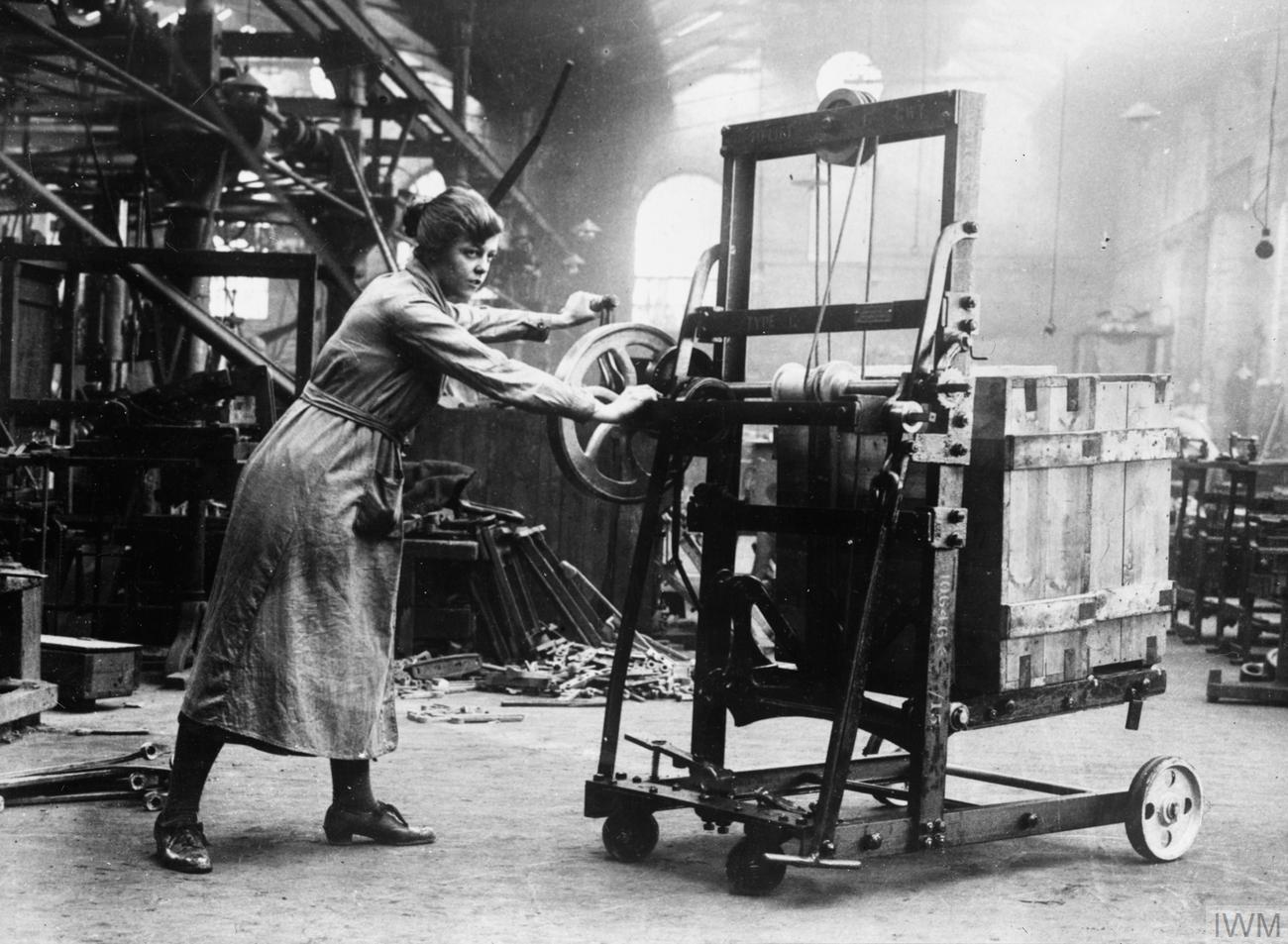 2026-10-01 18:48:07 - Paul D. Foy - One shouldn't forget the children in these continental countries and also in England, because, like the women, they undertook arduous labour as well. In Holland and Belgium, in urban areas in the early 19th century, they worked in factories and mines very much, as in England, until pioneers like Van Houten, for example, in the Netherlands, got legislation enacted that ameliorated their conditions. In rural areas as well they were expected to work. Indeed once the Dutch legislation was passed, there was an exemption for rural areas so they were expected to work and were exploited in these areas as well, if not more so. The work undertaken by children in the rural areas perhaps wasn't quite as bad although they may be involved in weeding, from an early age. When very young they may have had lighter duties like scaring birds, collecting eggs, or herding geese, that kind of thing, as the picture here shows. 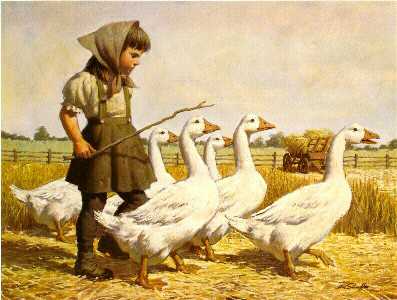 2026-09-30 18:38:31 - Paul D. Foy - It's not just in France that women were heavily involved in agricultural work. In Germany, in the areas which are regarded as the harbinger of Germany proper (the duchies and the states that made up the configuration that's sometimes known as the Holy Roman Empire, Prussia, those kinds of areas), women were heavily involved in agricultural work. It's estimated that some 50% of the female population in rural areas was involved in agricultural work, doing the same type of arduous work as in France. Incidentally German women also had another quite lucrative avenue of work: working in England as nannies, governesses, and housekeepers for members of the British gentry, the British aristocracy. They were used as language tutors, governesses, and educators. They were involved in tutoring in deportment, elocution, and foreign languages. In fact they were well regarded by the British gentry, who found the continental accent quite fashionable, and the connections with the Hanoverian kings of England were also a very plus point for these ladies. As serving members of the household they were expected to make and repair their own and old clothes respectively and make repairs to curtains around the house as well, as the picture shows. 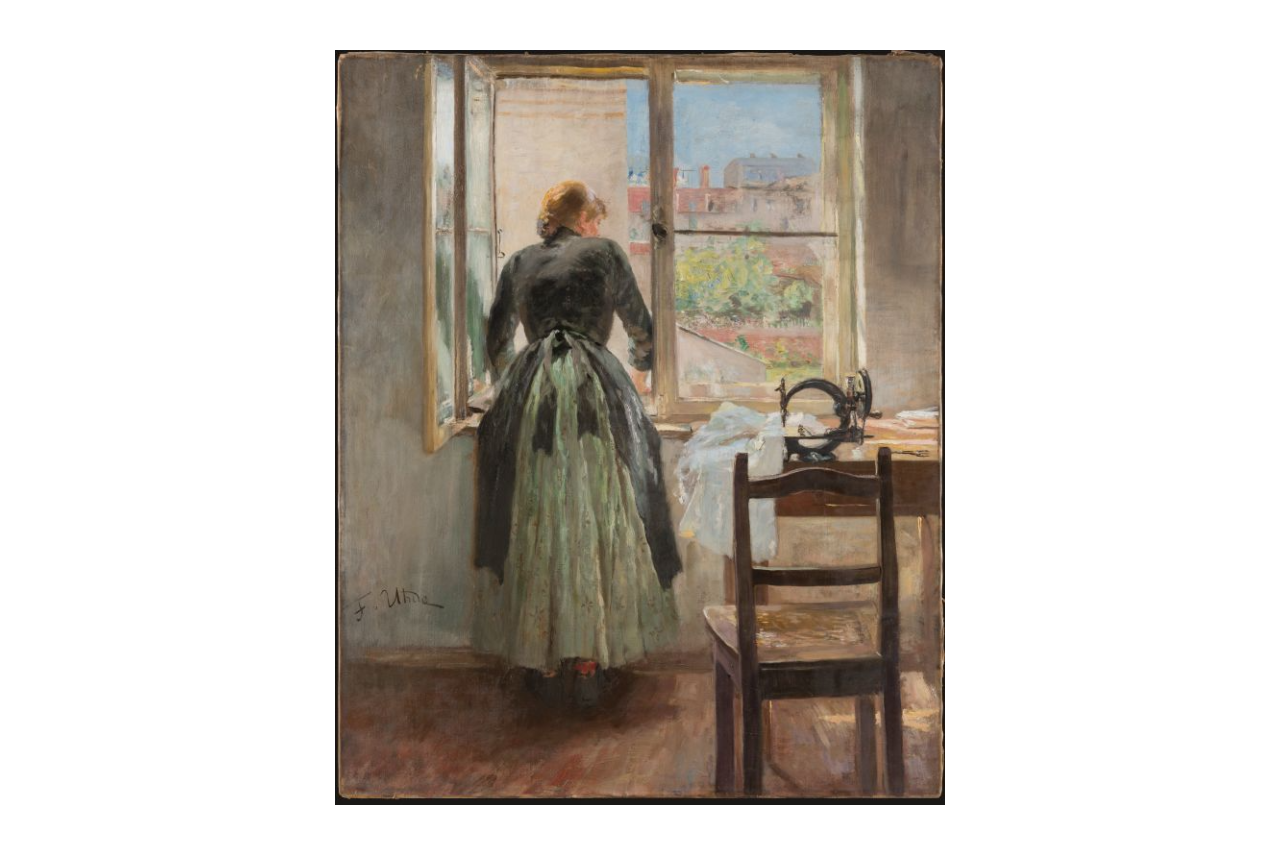 2026-09-29 18:56:17 - Paul D. Foy - It's not just in factory, industrial, or mining arenas where women work as well, but they also have worked extensively in agricultural areas. For example in France in the 19th century, they were slower to adopt the automation and mechanisation of the Industrial Revolution due to their lesser coal reserves than the UK. When this did occur it was predominantly the men that moved into the factories to work indoors, leaving many of the women to work outside in the countryside. They had many responsibilities in the countryside, as well as managing the household and being involved in commerce in the countryside. They undertook many arduous and manual labour duties, including all tasks involved in planting, tending, and harvesting. For example they would glean corn when it had been cut by the thresher. They would harvest potatoes, as this picture from Jules Bastien-Lepage from the Museum of Victoria in Australia shows. They were involved in many arduous tasks: spreading manure, digging, tending, weeding. Milking cows and feeding poultry. It's estimated in France that some 40% of the labour force in the countryside was composed of women. The hours were long, typically 10 to 14 hours a day. 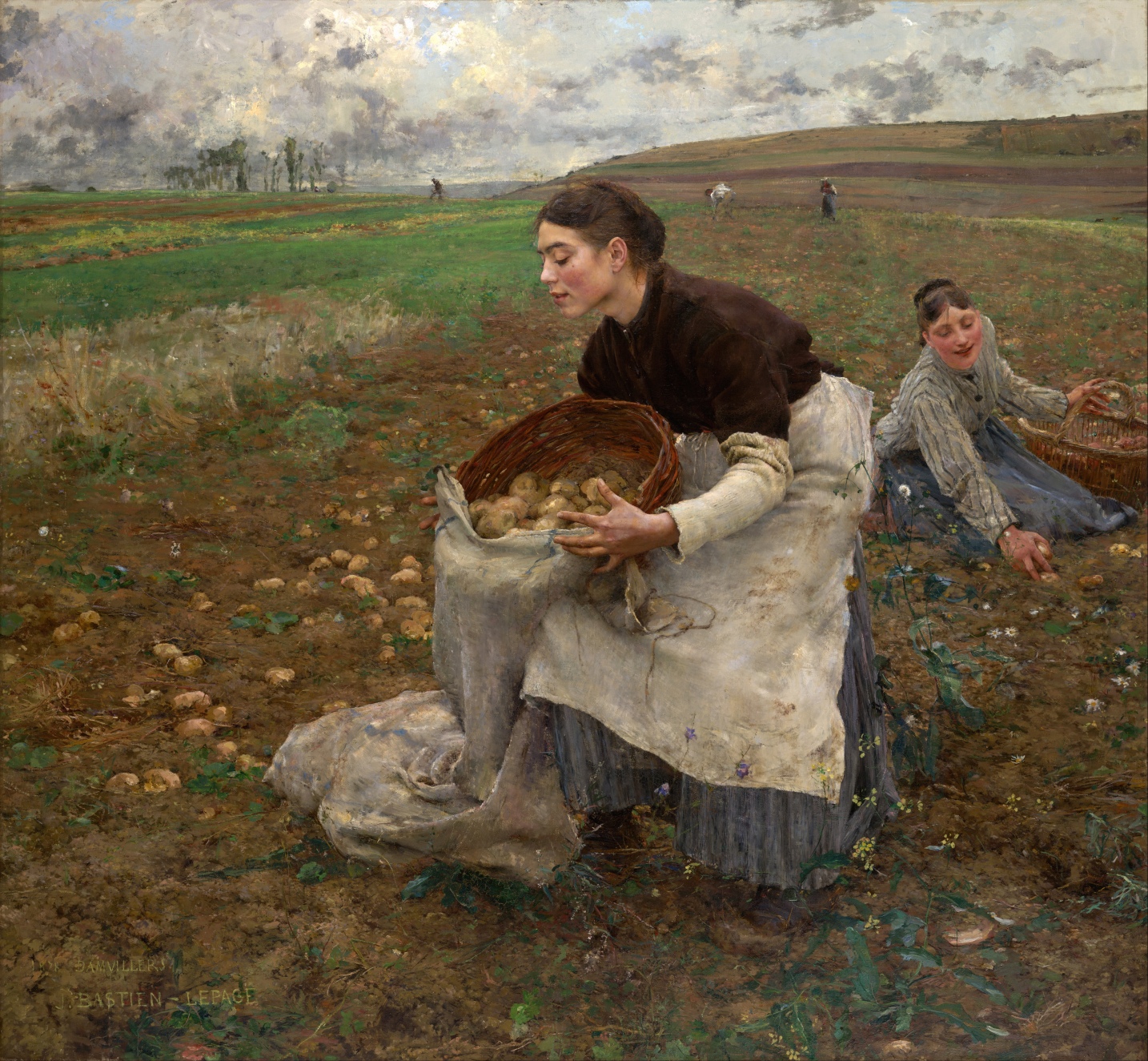 2026-09-20 14:05:21 - Paul D. Foy - The area of Barnsley and neighbouring Sheffield and Rotherham is an area where women found ready manual labour in the mines, hurrying trucks and that kind of thing, before the 1842 Mining Act banned them from working underground and when they moved onto the surface. Indeed it is from these areas, Barnsley and neighbouring Sheffield, that many of the women in the Chartist movement emerged. They were actively calling for women's suffrage. Prominent figures such as Abiah Higginbottom made one of the first political declaration for women's suffrage. I think it was part of the the Sheffield Political Association or something. These women were active in the Chartist movement. For example as the holders of the cash strings in the household, they used 'exclusive dealing' with retailers and only worked with retailers who supported the Chartists' objectives. They were against the workhouse system of correction and destitution because it separated husbands from wives and mothers from their children, and many other tenants of the patriarchy that was in existence at the time. Post a comment: |